Friday, May 24, 2019

Book Review: The Drowned Village by Kathlen McGurl


Some books have the power to remain with the reader forever; The Drowned Village is such a book. If there is one lesson to be learned from this story, it is that none of us can expect to have complete control over our lives. There is always the possibility that we will be dealt an unexpected blow, even an undeserving one, and even the most unfortunate among us must continue to put one foot in front of the other and make the best from what we have left.


Read the full review below or watch the video here or at https://youtu.be/fp03wQGuvX8.


Stella is ten years old in 1935 as she walks the Old Corpse Road with her father, her younger sister and a funeral procession for her mother. The family is poor, the father cobbling together the barest of income by making repairs to neighbors’ equipment, such as bicycles. With his wife gone, he must support his family while also babysitting three-year-old Jessie while Stella is at school. When his elderly father requires assistance with his most basic of needs, he must move him into his own home and care for him as well. Added to this weight is the news that Brackendale Green, the English village in which they live, will be completely demolished as a newly built dam is expected to flood the village.


Through the course of this book, we see a motherless child forced to grow up all too swiftly as catastrophic events beyond her control cause her to lose everything she’s ever known. She blames herself through the decades for being unable to stop these events, despite the fact that she was only a child when they occurred.


As we flash forward to the present day, Stella is an elderly woman urging her grown granddaughter Laura to visit the Lake District after an unusual drought has left the lakebed dry, exposing the village for the first time in decades. There are secrets hidden in the ruins, secrets that have haunted Stella for an entire lifetime and now, too frail to go herself, it is up to Laura to uncover them and set things right. Laura is rebounding from a disastrous relationship and needs a break from her job and caring for her grandmother. What she will find in the drowned village will change not only her grandmother’s life but also her own.


The Lake District with its condemned village, inspired by the real Haweswater reservoir and Mardale Valley, comes alive. I could feel the heaviness as Stella walked along the Old Corpse Road, could picture the variety of characters in the village—both friend and foe—and I felt as though I had been transported back in time. The characters are so multi-dimensional that I realized I was intentionally slowing down my reading because I did not want the book to end. And when it did, I found myself dreaming about Stella, her father and her sister. 


The Drowned Village by Kathleen McGurl is a classic. I highly recommend it.


Read more book reviews at http://pmterrell.com/authors-and-books/. p.m.terrell is the award-winning, internationally acclaimed author of more than 22 books in a variety of genres.

Thursday, April 25, 2019

The Forgotten Secret by Kathleen McGurl


In The Forgotten Secret by Kathleen McGurl, Clare Farrell is approaching her 50th birthday. For half of her life she has been married to a narcissistic man who has systematically cut her off from everything and everyone that did not center around him. So when Clare inherits her uncle’s home in Ireland along with a monetary inheritance, she decides to take the leap and separate from her husband and begin life anew. The house holds secrets, including a stash of guns and weapons under a floor in the barn and a birth certificate and communion medallion from two separate people tucked away in the stuffing of an old armchair.

Watch the video below or skip beneath it for the rest of the book review.


I rooted for Clare. I cheered for her, cried with her and laughed with her. Breaking away would not be easy and she encounters events such as wrecking her automobile on an Irish country road to renovating a centuries-old home that has fallen into disrepair. But she makes friends in the nearby village and she exhibits a lot of grit, determination and courage.


In between Clare’s chapters, we learn of a woman connected to the house a century earlier during the Irish War for Independence. Ellen O’Brien lives with her crotchety father in a modest home but she’s dating Jimmy Gallagher, a young man she’s known an entire lifetime. They were best friends in school and now they’ve become lovers as well as clandestine members of the Irish underground volunteers fighting for independence from Great Britain. It is Jimmy who grew up in the house that Clare inherits and it’s both Jimmy’s story and Ellen’s that rolls out through the book.


The author, Kathleen McGurl, describes the countryside so well that I could see the village in my mind’s eye, both as it was in 1920 as well as present day. I came to respect the danger that Ellen, Jimmy and others willingly undertook to fight for their cause—a cause that would cost some their lives. And when Ellen discovers she is pregnant yet she is still unmarried, I felt her anguish at being sent to one of the Magdalene Laundries, a convent for unwed mothers and their babies that turned into an unsaintly prison.


We also see the contrasts in what women could accomplish within a brief hundred years—at Ellen’s dependency on her father and the kindness of strangers to Clare’s struggle for independence.


Like all of McGurl’s books, there are multiple threads that seem unrelated but all blend together into a seamless mosaic of love and war, endings and new beginnings. I highly recommend The Forgotten Secret by Kathleen McGurl.


Saturday, March 30, 2019

Wildfire at Midnight


I just finished reading Mary Stewart’s book, Wildfire at Midnight. The book was originally published in 1956 and was re-released in 2011. Reading it was such a pleasure that it reminded me why Stewart’s books landed on the New York Times and other bestseller lists multiple times, and why many consider her to be the founder of the romantic mystery genre. My review is contained in the video below, or you can skip the video and read the review beneath it.


Mary Stewart was born in England but she died in Scotland, and her knowledge of the Highlands—and particularly of Skye, the book’s setting—is apparent. I do not fish and I have never climbed and never thought I would be interested in the details of either sport, though books on Mount Everest are among my favorites. In Wildfire at Midnight, the heroine—Gianetta or more commonly called Janet—is much the same. In need of a break from her job, she heads to a resort on Skye and runs right into her ex-husband Nicholas. Determined to remain there and enjoy her time anyway, she is soon caught up in the tension at the resort—a tension, it turns out, to have been brought about by a ritual murder on the mountain. It is a murder in which the resort’s guests are each suspect—all except Janet, who arrived after it had taken place.


We meet a wide range of characters, from cheating husbands to unhappy wives and when two women become lost on the mountain, the suspense ratchets up. One is found dead after her rope had been cut and the other nearly dead several days later. Now unconscious, Roberta cannot tell the authorities who the murderer is, and the killer makes an attempt on her again. Then another guest is found murdered, his throat slit—and our heroine, wishing for a quiet afternoon fishing, winds up in a fight for survival.


The action is fast, the words concise. Though it was written in the 1950’s, the heroine is surprisingly independent and quite capable of standing up for herself. After her divorce, she returns to a very successful modeling career and has become somewhat of a celebrity—though in the end, in typical 1950’s fashion, the book turns to a woman-in-jeopardy with a romantic ending.


There are twists and turns in this book, each time causing me to question which of the resort guests could be the killer—and it isn’t limited only to the men. Amid the suspense are the sweeping vistas of the mountains, the varying experience of the climbers, both the serenity and the dangers of a land that is so enticing and yet so unforgiving.


Mary Stewart wrote around 17 romantic suspense novels in addition to books in four other genres. If you haven’t read any of them, Wildfire at Midnight is a great place to start.


Watch videos on books and authors at http://pmterrell.com/authors-and-books/ and behind the scenes of p.m.terrell's own 22+ suspense, historical and children's books at http://pmterrell.com/wp/inside-the-stories/.


Saturday, March 2, 2019

A Wee Murder in my Shop


I’d like to tell you about a book I just read by Fran Stewart called A Wee Murder in my Shop. For the past few years there has been a constant slate of hard-hitting news stories and sometimes it’s necessary to escape into a different type of drama, one that is far removed from current world events, and A Wee Murder in My Shop is just the ticket. Watch the video below or at https://youtu.be/FRDyIhvZo9o or skip below the video to read the review.


I knew I had to read this book when the author told me that she was inspired to write it by R. A. Dick’s classic, The Ghost and Mrs. Muir. That is one of my all-time favorites, but I always wished that Lucy Muir and Captain Gregg had been able to remain together and form a deeper relationship. This book reminds me a lot of that but it also brings us up to date with a more modern and independent protagonist, Peggy Winn.


Instead of inheriting a ghost with a house as Lucy Muir did, Peggy gets the ghost when she purchases a Scottish shawl that turns out to be roughly 700 years old. And while the ghost is also that age, he's frozen in time as a virile 30-something who is still deeply in love with the woman who first owned the shawl. Now that the shawl has somehow been resurrected after all those centuries, the ghost Peggy nicknames Dirk remains with it as if tethered to it, following Peggy across the Atlantic to Vermont where she owns a gift shop called The ScotShop.

Soon Peggy and Dirk are pulled into a murder mystery. The victim is none other than Peggy's ex-boyfriend and the crime scene is smack dab in the middle of Peggy's stop. We are introduced to a cast of memorable characters, some of whom seem to have secrets, and we’re left guessing who killed Mason, why, and above all, why he was killed in her shop in the dead of night. The investigator is a modern day love throb, Harper, and I found myself caught between wishing for a magical relationship with Dirk or a more realistic love affair with Harper.

The author reeled me in and I could visualize the quaint Vermont village with its Scottish theme, rows of gift shops and cozy restaurants and steady stream of tourists—so much so, that I wish I knew if there was truly a village the place was based on so I could visit. There are ample clues and red herrings throughout the book, including some twists that take us into the distant past, all woven together so expertly that I really didn't know how the story was going to end.


The book is truly entertaining and a fun read and escape. We don’t learn exactly why Dirk is tethered to the shawl, which turns out to be fine because this is only the first in the ScotShop Mystery Series. I was very happy to discover that Peggy, her ghost and her new love interest have all been set up nicely for the sequel. It’s rather like wrapping up some details in a television series but leaving us with a cliffhanger so we’re eagerly looking forward to the next installment, and in fact, I can definitely see this series made into a television series complete with the strong, independent woman, the sexy detective and the very sexy Scottish ghost. I highly recommend A Wee Murder in my Shop by Fran Stewart.

Visit my YouTube channel at https://www.youtube.com/user/terrellpm for more book reviews or visit my website at http://pmterrell.com/ for book trailers, the inside story of my writing as well as other authors, excerpts from my books and much more.


Saturday, December 22, 2018

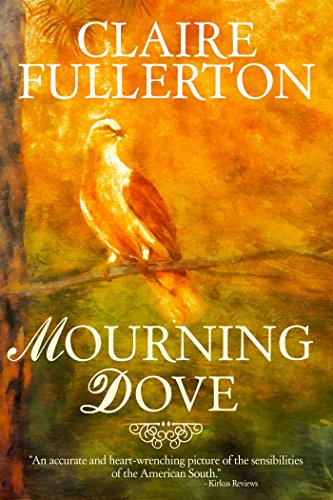
Mourning Dove


I purchased Mourning Dove by Claire Fullerton for two reasons. First, I had read Dancing to an Irish Reel which takes place in my favorite place—Ireland—and thoroughly enjoyed it so I knew I enjoyed her style of writing. Second, Mourning Dove takes place in Memphis in the 1970s. I lived for a few years during the ‘70s in the Mississippi Delta and I was curious how the backdrop of Mourning Dove fit into my recollections of the place and the era.

Watch the video or read my review below the video:


From the beginning, I was intrigued because the narrator of the story, Millie Crossan, mentions that her beloved brother Finley is dead. I found myself wondering with each twist in the journey whether that would be the moment he dies, and it cast a bittersweet mood over the book, knowing that each moment of his life was precious and it would be cut short way too soon.


Family dynamics come to life through a loving and caring but alcoholic father and we view Memphis society through their socialite mother as the parents separate and divorce and the mother remarries. Finley seems grounded and wise beyond his years, providing stability and refuge for Millie. Music becomes part of the backdrop as Finley joins a band and it appears that success is imminent. And though Millie eventually graduates, gets married, miscarries and is divorced, the book is not about her relationship with her boyfriend/spouse or friends in Memphis as much as it is an ode to her brother and the vital role he played in her life. They are almost like soul mates, weaving through their own lives yet always finding their way back to the other despite the miles that eventually separates them.


When I finished Mourning Dove, I was struck by the brevity of life and how quickly it plays itself out. I was also reminded that regardless of the paths we take in adulthood, our lives are truly formed by those early years. It brought back memories for me of a different time and place, a bygone era that seems cruel and crude in comparison with today’s enlightenment. It reminded me just how far we have come, and how far we have yet to go.


Check out my other book reviews on YouTube, and articles behind the scenes of writing books at my website at pmterrell.com. 


Saturday, November 10, 2018

The Shadowy Horses by Susanna Kearsley - Review


In The Shadowy Horses by Susanna Kearsley, archeologist Verity Grey begins an excavation in Scotland. The Ninth Roman Legion was rumored to have camped there as they marched north from York to fight the Scots, and the owner of a remote manor house is convinced his property contains the bones of the lost legion.


From the first night in the manor house, Verity hears the horses thundering across the fields beneath her window, whinnying and snorting as their hooves pound the ground. Yet when she begins her first day of work, she discovers there are no horses within miles around.


The cook’s son has paranormal gifts that Verity vainly attempts to logically explain away. He sees the ghost of a Roman sentinel walking through the fields. Verity reminds him of his sister, so the phantom is determined to remain near her, watching over her and protecting her—which factors into the climactic scenes. The cook’s son also sees things before they happen and occasionally is consumed by other unseen presences.


As Verity begins the excavation work, she is joined by others including a handsome Scot named David so in addition to the ghost and the work, she finds herself caught up in romance.


I have loved every Susanna Kearsley book I’ve read. Her beautiful style reminds me of books I read while growing up; a modern-day Daphne du Maurier or Mary Stewart. The characters are complex, revealing themselves one layer at a time. The setting is described so exquisitely that I could smell the heather in the fields, the rain moving in, the fish market in the village. I could hear the shadowy horses thundering through the fields, I could feel the ghostly presence of one that can never leave his last encampment. Reading any of Kearsley’s books is truly an immersive experience.


There is a twist at the end that I didn’t see coming but in retrospect, all the clues were there, cleverly hidden in plain sight.


I definitely give this book five stars and I’m anxious to read another of Kearsley’s books as quickly as possible. They are addictive.


Watch the Book Tuber Video below:


Thursday, November 8, 2018

In Geography Lies Your Destiny


I have often heard the phrase “geography is destiny”. Originally a geopolitical theory that refers to certain geographic regions that carry strategic advantage, it can also be applied to the way your life unfolds, the opportunities open to you and ultimately to what you are able to achieve in life. This philosophy was brilliantly portrayed in the 2017 neo-Western murder mystery movie inspired by a true story, Wind River, starring Jeremy Renner and Elizabeth Olsen.


The story takes place on the Wind River Indian Reservation in Wyoming in the middle of winter. It is an inhospitable place, isolated from the rest of the world in a winter wonderland that can turn vicious in an instant. Early in the movie we learn the atmosphere becomes so cold that the air in the lungs can actually crystallize, leading to death. When expert tracker and U.S. Fish and Wildlife Agent Cory Lambert (played by Jeremy Renner) discovers a young woman’s body six miles from the nearest structure, he recognizes the telltale signs of pulmonary hemorrhage. The question is why she was so far from anything; tracing her footsteps, he comes to the conclusion she had been running for six miles—barefoot on ice and snow.


The Wind River Indian Reservation is a place forgotten by modern man, though it encompasses over 3,000 square miles as well as 3,500 square miles of water. It is the home of just over 26,000 Eastern Shoshone and Northern Arapaho Native Americans, descendants of people pushed onto the reservation from their original territory beginning in 1868, some 30 years after the Cherokee were relocated along the Trail of Tears to Oklahoma.


The Reservation has only a handful of people on their police force and because the FBI has jurisdiction on federal property, an agent is called in from Las Vegas when the coroner confirms the victim had been sexually assaulted. Jane Banner, played by Elizabeth Olsen, is unfamiliar with the unforgiving landscape and relies on Cory Lambert to assist her in the investigation.


The landscape itself becomes an antagonist. Regardless of the temperature in the room, you will find yourself shivering and reaching for an extra throw or blanket. The fact that Native Americans were forced to live there—and they survived—is a testament to the ability of human beings to adapt. Opportunities there are nearly non-existent; in one scene, a young man is asked why he didn’t get out when he might have been able to escape the poverty, high crime and hopelessness. One gets the sense that because these people have lived there for generations, sometimes the land itself prevents them from straying far, regardless of the opportunities that might be available to them elsewhere. It is as if their feet have roots grown deep into the frozen ground, fusing them forever to that place and time.


I admit I closed my eyes during a scene toward the end of the movie, where we learn in a flashback what occurred to the young woman and how she came to be outside in her bare feet, running for her life for six miles over ice and snow that would have stopped an average human being in their tracks long before it stopped her. By this time, the haunting landscape and the plight of its people had pervaded my spirit and long after the movie was over, I felt as if I was still there.


Missing person statistics exist for every demographic except Native American women. The life expectancy on the Wind River Indian Reservation is only 49 years and unemployment rates are more than 80%. (Bustle,2017) Though missing person statistics are not kept, Native American women are 10 times more likely to be murdered than other groups and experience rape and sexual assault at 4 times the national average. (NewYork Times, 2012)


If geography determines our destiny, it is difficult to fathom why anyone would remain in a place that appears destined to kill them—perhaps the original intent when these tribes were forced from their original territories. And yet it happens all across the globe. The invisible system that anchors us remain so strong that it is often difficult—if not impossible—to break free.


Wind River: five stars and highly recommended